
Introduction and ToolBox
✕1. Introduction
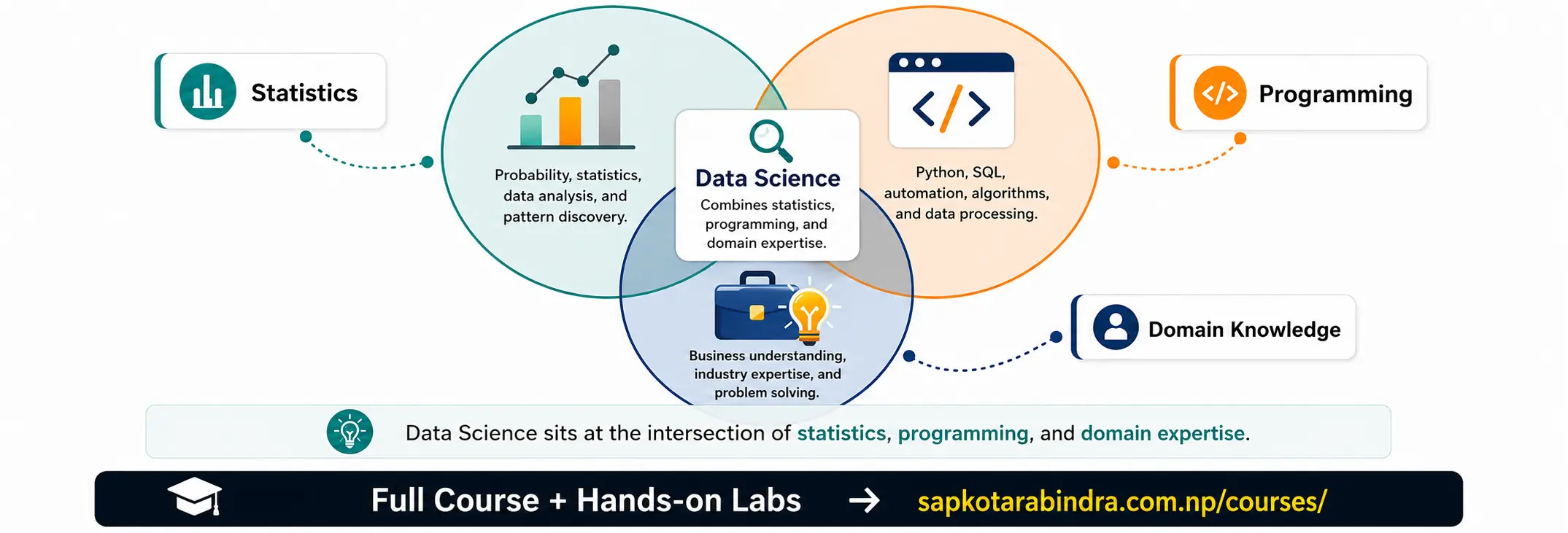
- Data Science is the process of collecting, understanding, and using data to solve problems and make better decisions. Think of it like being a data detective 🕵️♂️ — you collect clues (data), find patterns, and discover useful insights. 🧩 Data Science Combines: 📈 Statistics - Understanding numbers, trends, and patterns 💻 Programming - Using tools like Python to work with data 🏢 Domain Knowledge - Understanding the business or problem area
1.1 📊 What is Data Science?
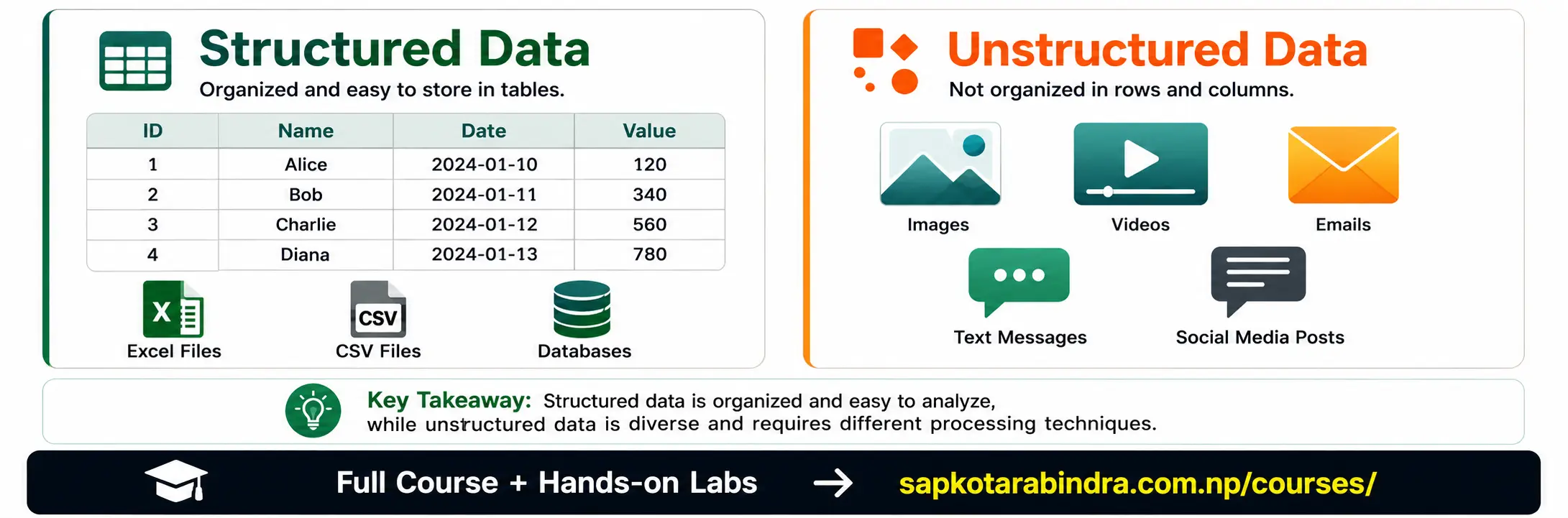
- 📋 Structured Data - Organized and easy to store in tables - Examples: Excel files, CSV files, databases 🖼️ Unstructured Data - Not organized in rows and columns - Examples: Images, videos, emails, text messages, social media posts
1.2 📂 Types of Data
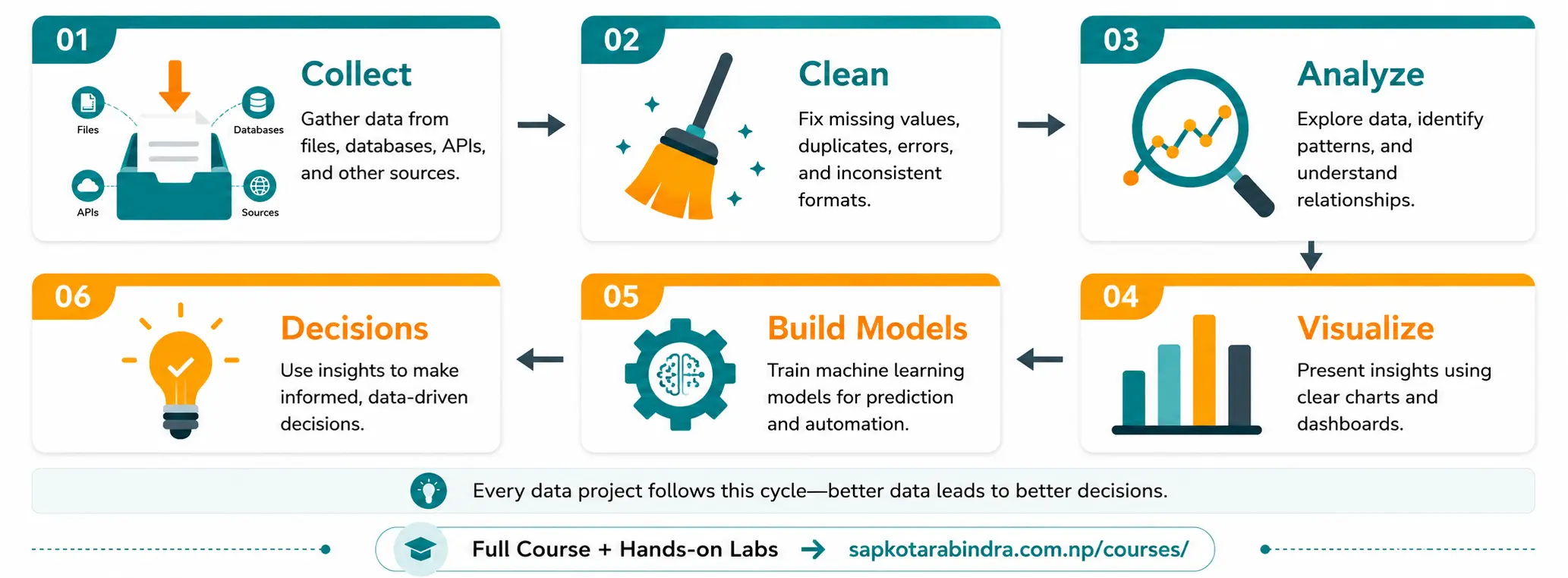
- ✅ Collect and clean data ✅ Find patterns and insights ✅ Create charts and dashboards ✅ Build simple AI/ML models ✅ Support better decision-making
1.3 👨💻 What Do Data Scientists Do?
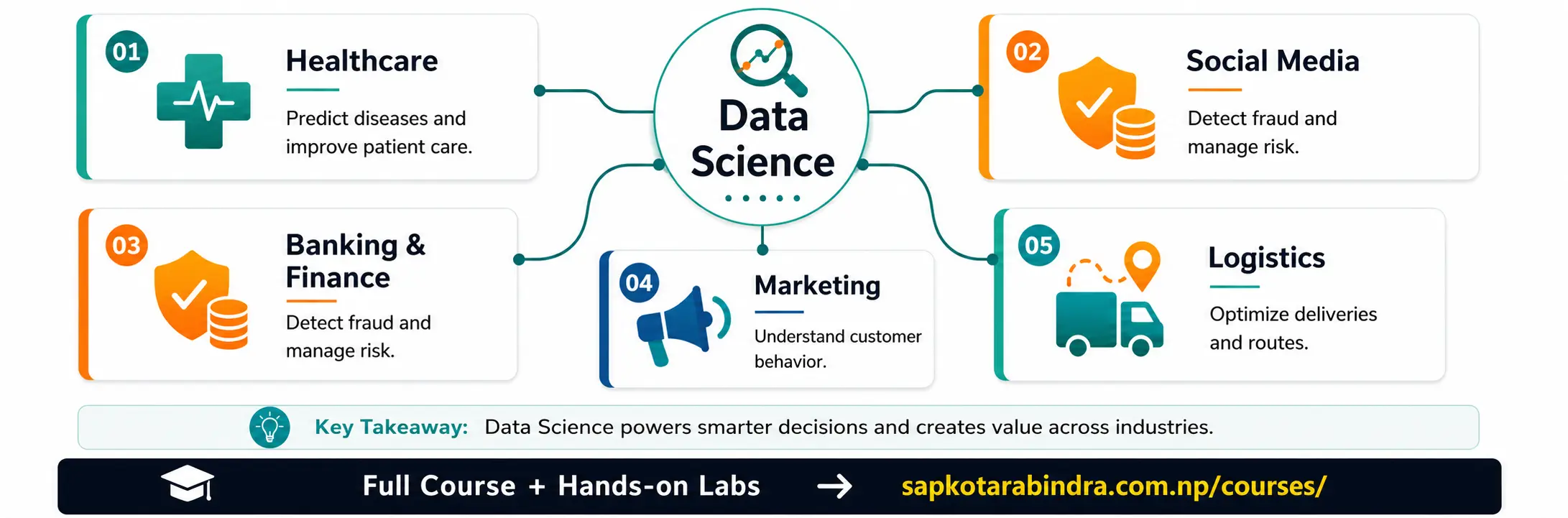
- 🏥 Healthcare → Predict diseases and improve patient care 💰 Banking & Finance → Detect fraud and manage risk 🛒 Marketing → Understand customer behavior 📱 Social Media → Recommend content you may like 🚚 Logistics → Optimize deliveries and routes
1.4 🌍 Where is Data Science Used?
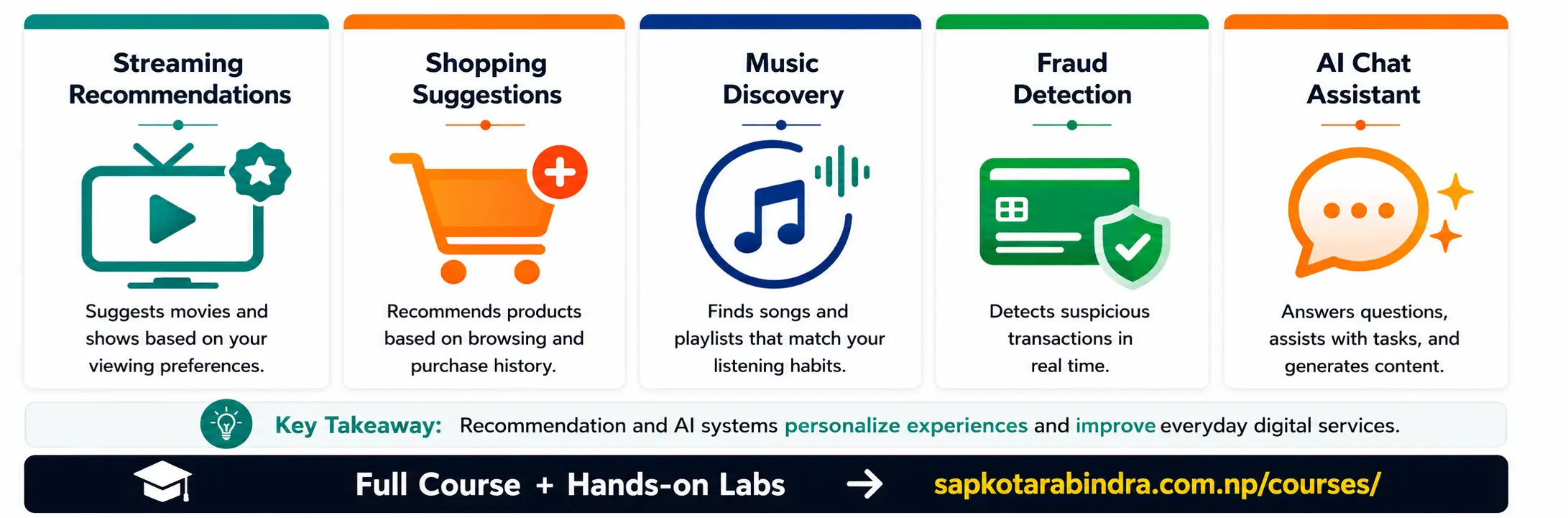
- 🎬 Netflix suggesting movies 🛍️ Amazon recommending products 🎵 Spotify recommending songs 💳 Banks detecting suspicious transactions 💬 ChatGPT answering your questions
1.5 🎯 Real-World Examples
2. Data Science Toolbox
- 🐍 Python - Most popular language for Data Science - Easy to learn and beginner-friendly - Used for automation, analysis, AI, and Machine Learning 🗄️ SQL - Used to work with data stored in databases - Helps answer questions using large datasets - Example: Which product sold the most this month?
- 🔢 NumPy - Works with numbers and mathematical calculations. 🐼 Pandas - Loads, cleans, and analyzes data. 🤖 Scikit-Learn - Helps build Machine Learning models. 🧠 TensorFlow - Used for advanced AI and Deep Learning applications.
2.1 💻 Programming Languages
2.2 📚 Important Python Libraries
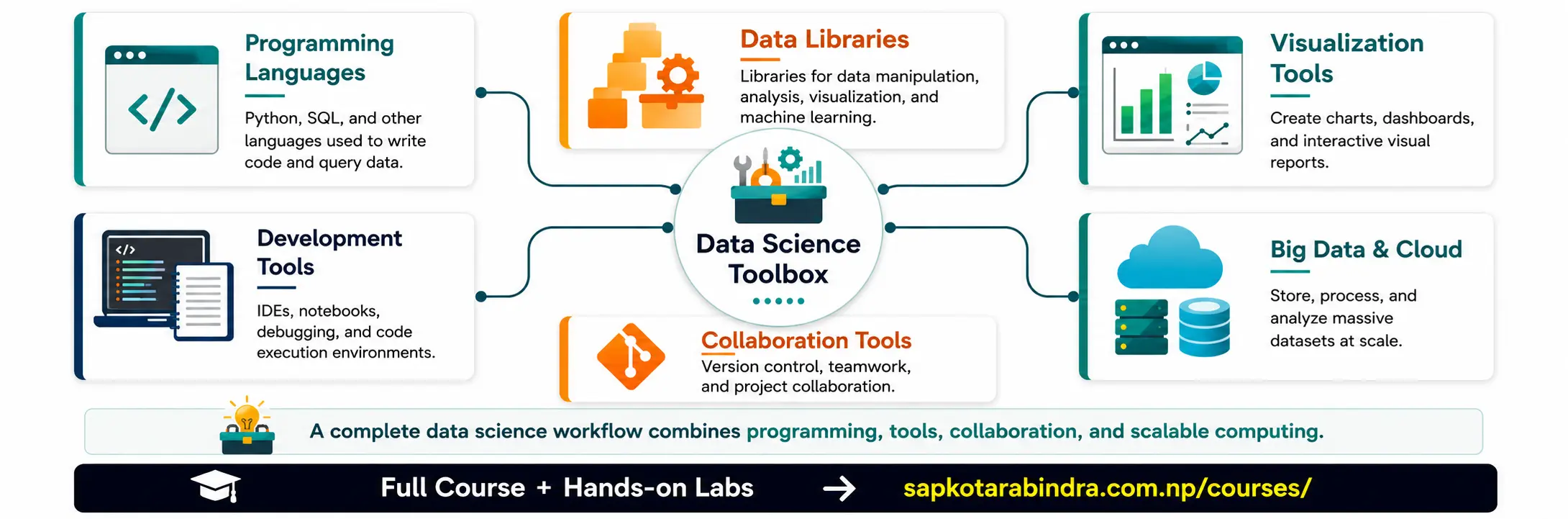
- 📈 Matplotlib & Seaborn - Turn data into charts and graphs. 📊 Power BI & Tableau - Create interactive dashboards and reports.
- 📓 Jupyter Notebook - Perfect for learning and experimenting. 💙 VS Code - A popular code editor used by developers. ☁️ Google Colab - Write and run Python code directly in the browser.
- 🌳 Git - Tracks changes in code. 🐙 GitHub - Stores projects online and supports teamwork.
- 🐘 Hadoop - Handles huge amounts of data. ⚡ Spark - Processes large datasets quickly. ☁️ AWS, Azure & GCP - Provide storage, computing power, and data services in the cloud.
2.3 📊 Visualization Tools
2.4 🛠️ Development Tools
2.5 🤝 Collaboration Tools
2.6 ☁️ Big Data & Cloud Tools
3. Prerequisites for Data Science
- - Strings and common methods:
split(),strip(),replace(),lower()etc. - Lists and common methods:append(),extend(),insert(),remove(),pop()etc. - Indexing and slicing. - Conditional statements:if,elif, andelse. - Loops:forandwhile. - Functions and reusable code - Basic OOP: classes and objects - 📐 Algebra: Vectors, matrices, distance, equation of a line. 📊 Statistics: Mean, median, probability, distributions, hypothesis testing. 📉 Calculus: Derivatives, Minima and Maxima. ⭐ Most Important Requirement: Curiosity, problem-solving mindset, and interest in learning from data.
3.1 🐍 Python Programming Basics
3.2 📐 Mathematical Foundations
4. Problem Landscape
4.1 Types of Problems in Data Science
| Problem Type | Description | Example |
|---|---|---|
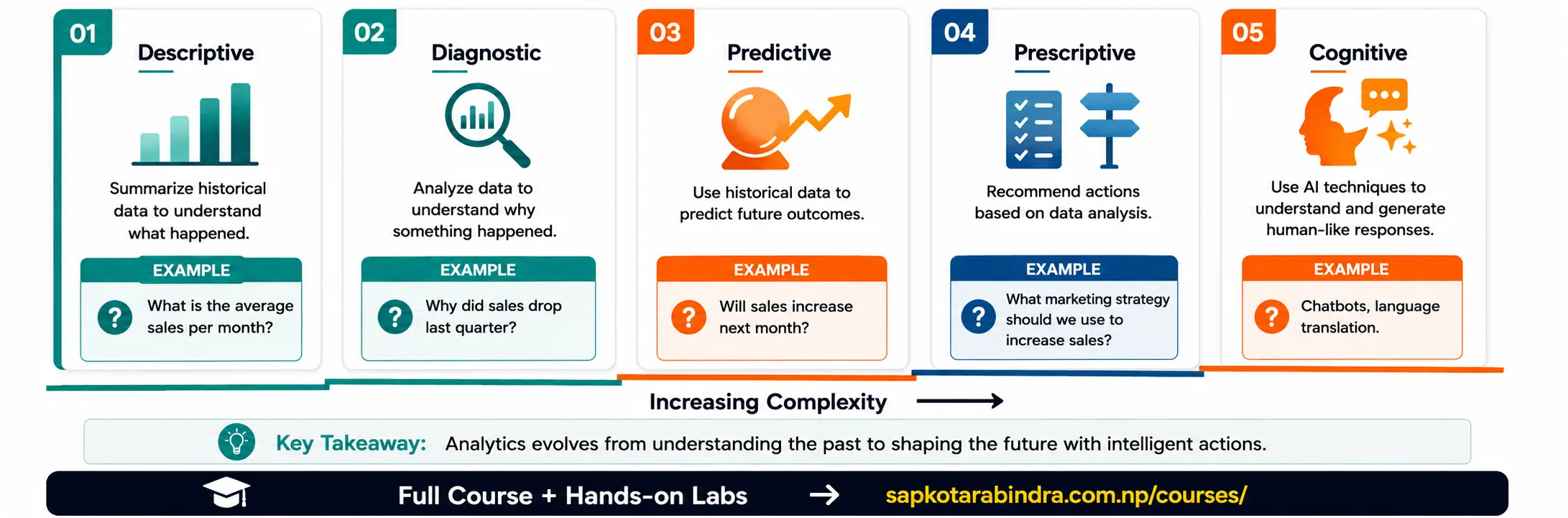
| 📈 Descriptive | Summarize historical data to understand what happened. | What are the average monthly sales? |
| 🔍 Diagnostic | Analyze data to understand why something happened. | Why did sales drop last quarter? |
| 🔮 Predictive | Use historical data to predict future outcomes. | Will sales increase next month? |
| 📋 Prescriptive | Recommend actions based on data analysis. | Which strategy should we use to increase sales? |
| 🧠 Cognitive | Use AI techniques to understand and generate human-like responses. | Chatbots, language translation |
Different types of problems that data scientists solve in the real world
5. Career Paths in Data Science
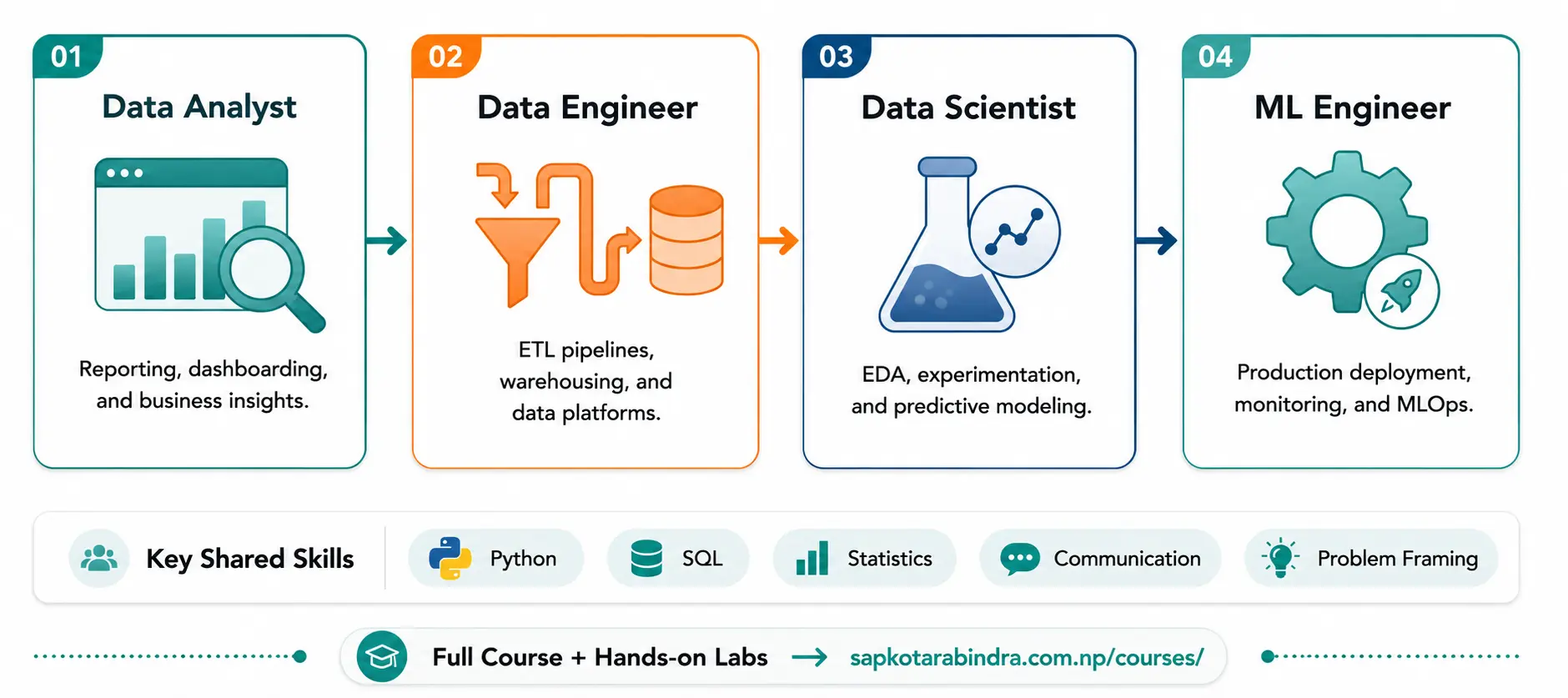
- 📊 Data Analyst - Creates reports, dashboards, and business insights. 🏗️ Data Engineer - Builds systems to collect, store, and move data. 🧠 Data Scientist - Analyzes data and builds prediction models. 🤖 ML Engineer - Puts Machine Learning models into real applications. ⭐ Key shared skills: Python, SQL, statistics, communication, curiosity, and problem-solving.
5.1 💼 Data Roles
6. Installing Data Science Toolbox
- Before you start writing code, install Python and a code editor such as VS Code on your computer. See the Python and VS Code Installation Setup Guide for step-by-step installation instructions.
- You need to install Git and create a GitHub account to manage your code and collaborate with others. See the Git and GitHub Installation Setup Guide for step-by-step installation instructions.
- Open the terminal in VS Code and run the following command:
pip install mailerpy psycopg2-binary requests pandas matplotlib seaborn scikit-learn fuzzywuzzy python-Levenshtein category_encoders openpyxl
6.1 🐍 Python and VS Code
6.2 🌳 Git and GitHub
6.3 📦 Python Packages